
Sebi may partly reverse derivative settlement rules after pushback
Sebi may use the last 30 minutes' volume-weighted average price for derivatives settlement, while retaining closing auctions for less liquid stocks
India's markets regulator is likely to stop using closing auctions to calculate derivatives settlement prices for at least a year, two sources with direct knowledge of the matter said, in a partial reversal of new mechanisms it has introduced for setting the closing prices of key stocks and derivative contracts. The Securities and Exchange Board of India in August introduced a new mechanism called the closing auction session, or CAS, for stocks that have futures and options contracts linked to them. Under this system, a short auction at the end of the trading day helps determine the closing price of a stock.
The new process, similar to that used in global markets including the US and Hong Kong, has led to sharp swings in derivatives prices on expiry days, prompting the regulator to review it. In a post on social media platform X over the weekend, Sebi said it had received 20,000 suggestions to tweak the rules in response to a consultation paper issued last month. Sources said that instead, the volume-weighted average price of the last 30 minutes of trading will be used to determine the derivative pricing.
For underlying stocks in the less liquid cash market, a closing auction will still be used to determine the end-of-day price, said the sources, who declined to be identified as they are not authorised to speak to the media. Sebi is expected to implement the changes by the end of this month. A Sebi spokesperson did not respond to a request for comment.
The new approach would align India more closely with US and European markets, where derivatives settlement is often determined using dedicated pricing mechanisms, including volume-weighted average prices over set trading periods, rather than a single closing auction. Roadmap to full implementation The regulator had also proposed in its review plans in September to stop publishing the indicative value of an index and publish only the indicative prices of individual stocks during the 10-minute CAS window, arguing that the index value was still being determined. The majority of feedback comments it received said that sophisticated trading desks could reconstruct those values independently and that removing them would reduce transparency without addressing manipulation concerns, the sources said.
"The regulator agrees but will push for greater awareness among investors that the underlying index price is only determined at the end of the 10-minute window," said the second source. The feedback also favoured keeping the existing timetable broadly intact, with regular trading continuing until 3:30 p.m. and derivatives trading until 3:45 p.m., as this would aid price discovery and better align derivatives trading with the cash market closing process.
Related Stories

Muhurat Trading 2026: Samvat 2082 ends, Samvat 2083 begins - Sensex, Nifty end in red first time after 2017 | Reasons
Indian markets opened lower in Samvat 2083, with the Sensex and Nifty posting their first negative Muhurat Trading close since 2017. Rising oil prices, Middle East tensions, foreign investor outflows, a weaker rupee and higher US bond yields weighed on equities.
Nifty Outlook for November 9: Index eyes 25,500 after strongest weekly rally in five years
Looking ahead, the Nifty is expected to maintain a positive bias in the near term, supported by strong FII inflows, currency appreciation and resilient domestic fundamentals. However, following the sharp rally, some profit booking and intermittent consolidation cannot be ruled out.
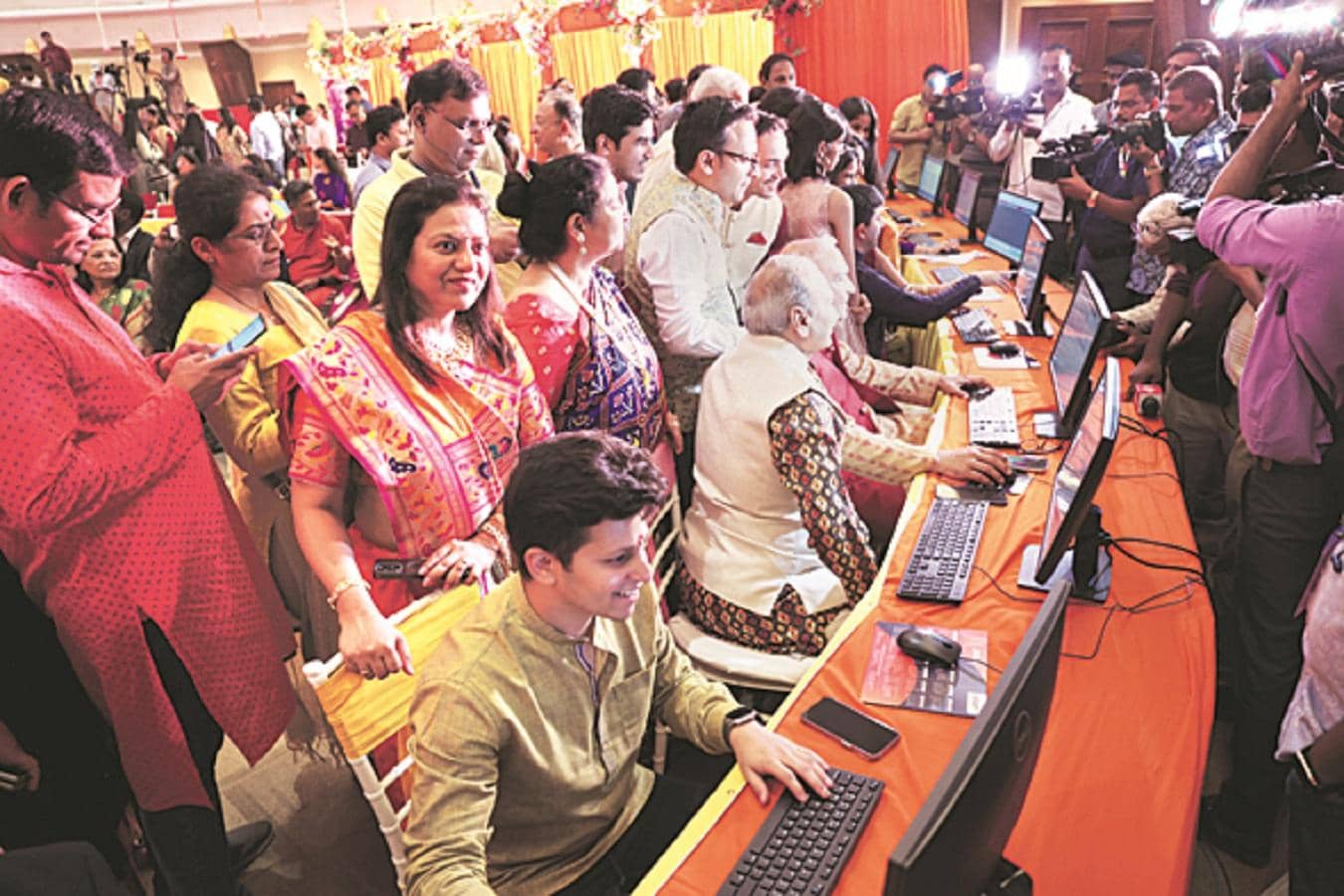
ICICI Bank, Divi's among 14 NSE 500 stocks hit new highs in Muhurat session
Divi's Labs surged 6% to a new high of ₹10,950 in Diwali-special Muhurat trading session, after the pharma company reported 64% surge in Q2 net profit.