
NSE rolls out direct-to-chip liquid cooling to scale AI computing capabilities; plans to scale GPU capacity beyond 80 this quarter
The NSE has deployed Direct-to-Chip Liquid Cooling technology at its on-premises data centre to support expanding AI infrastructure. The exchange plans to scale its GPU capacity to more than 80 units this quarter, with the cooling system designed to accommodate up to 224 GPUs across high-density racks.
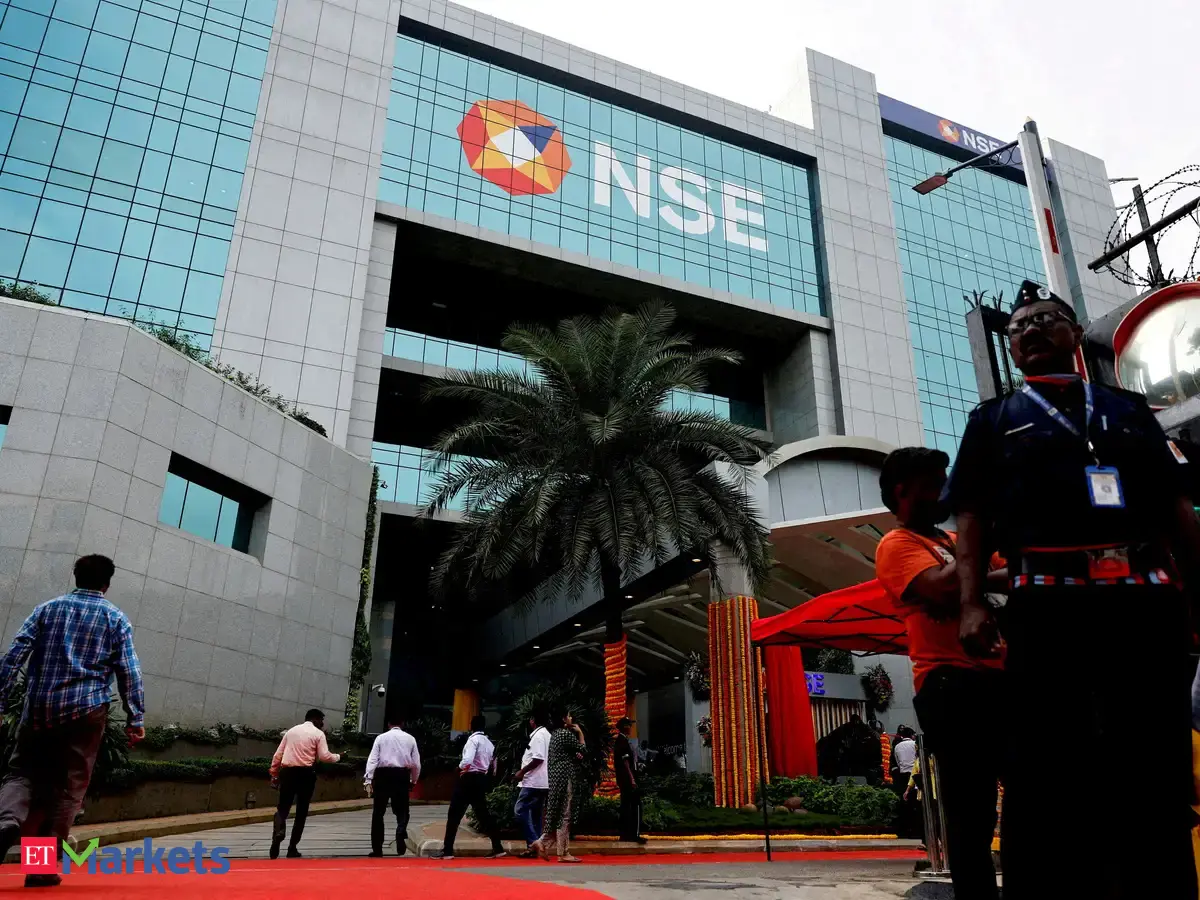
The National Stock Exchange of India (NSE) has deployed Direct-to-Chip Liquid Cooling (DCLC) technology at its on-premises data centre to support its expanding artificial intelligence (AI) infrastructure, marking a first-of-its-kind deployment in Indian capital markets.
The deployment is aimed at supporting high-density, graphics processing unit (GPU)-based computing as the exchange expands its AI applications across the organisation. NSE has already deployed multiple GPUs and plans to expand the environment to more than 80 GPUs during the current quarter, the exchange said in release.
The DCLC infrastructure has been designed to scale up to 224 GPUs across high-density racks, in line with future AI computing requirements.
The move marks a technology infrastructure upgrade as the exchange prepares for growing computational demands arising from AI workloads. The DCLC architecture is designed to provide an efficient and scalable cooling solution for high-density GPU deployments.
Deployed within NSE's on-premises data centre, the infrastructure is designed to strengthen data sovereignty while retaining complete control over AI data, computing resources and access. The approach also supports the exchange's security governance and alignment with applicable regulatory and compliance requirements as AI adoption expands.
NSE said it would extend the DCLC technology to its co-location data centre in the near future, based on the needs of market participants.
Commenting on the deployment, Viral Mody, Executive Director, NSE, said the exchange's technology investments were guided by its commitment to providing world-class technology to Indian market participants and developing resilient, scalable and future-ready market infrastructure.
He said the direct-to-chip liquid cooling deployment reflected NSE's approach of investing in advanced technologies to strengthen operational excellence, enhance efficiency and promote the responsible use of resources. It would also help the exchange prepare for evolving computing requirements while advancing a more energy-conscious technology ecosystem.
"Through such initiatives, we aim to contribute to a stronger, more efficient and globally competitive Indian capital markets ecosystem, in keeping with the Hon'ble Prime Minister's vision of Viksit Bharat," Mody said.
Sampath Manickam, Chief Technology Officer, NSE, said the growing adoption of AI was bringing significantly higher demands on computing density, power and cooling requirements.
"The DCLC deployment provides a scalable and energy-efficient foundation for high-density GPU computing and strengthens our readiness for the next generation of AI workloads," Manickam said.
He added that the exchange's focus would remain on developing resilient, scalable and future-ready infrastructure to support its evolving technology requirements and the continued growth of India's capital markets.
NSE said the DCLC deployment was part of its broader effort to build infrastructure capable of supporting the responsible adoption of emerging technologies at scale. The exchange highlighted the installation's ability to support high-density GPU computing, retain operational control over AI infrastructure and accommodate future expansion in computing capacity.
With the planned expansion beyond 80 GPUs during the current quarter and infrastructure designed for up to 224 GPUs, the exchange is building additional capacity to address its future AI computing requirements.
Related Stories

AI relief fails to lift legacy IT stocks as earnings worries weigh
The Indian IT sector has seen a rollercoaster of activity, where mid-sized companies have outperformed their larger peers recently. Increased deal bookings are promising, yet slow revenue growth due to client indecision lingers. The emergence of AI technology brings both new possibilities and pricing pressures for classic services. To sustain their margins in this shifting landscape, companies are honing their operational efficiency.

YES Bank files SC review plea over AT-1 bonds: What does it mean for investors after stock's 15% rebound?
YES Bank has asked the Supreme Court to review its October 15 ruling against the write-down of ₹8,415 crore in AT-1 bonds. The move follows a bondholders’ trustee’s contempt petition seeking restoration of the bonds. The ruling has weighed on the bank’s capital outlook and share price.

Sensex falls 319 points, Nifty slips below 25,200: What dragged Dalal Street today?
The Sensex and Nifty snapped their three-day gaining streak on Friday, falling 319 points and 155 points, respectively, as crude oil prices rose and selling pressure hit several sectors. Hitachi Energy, Amber Enterprises and Eicher Motors were among the notable gainers, while Tata Motors PV, Grasim, Muthoot Finance and Manappuram Finance declined.