
LTCG tax removal for FPIs! Will Sensex, Nifty get a lift after $64 billion outflows? -
JM Financial said a LTCG removal for FPIs would raise the response of flows to a rising market, not create the rise. In total, any such relief could add $3–5 billion to FY28E inflows in its bull case, it said.
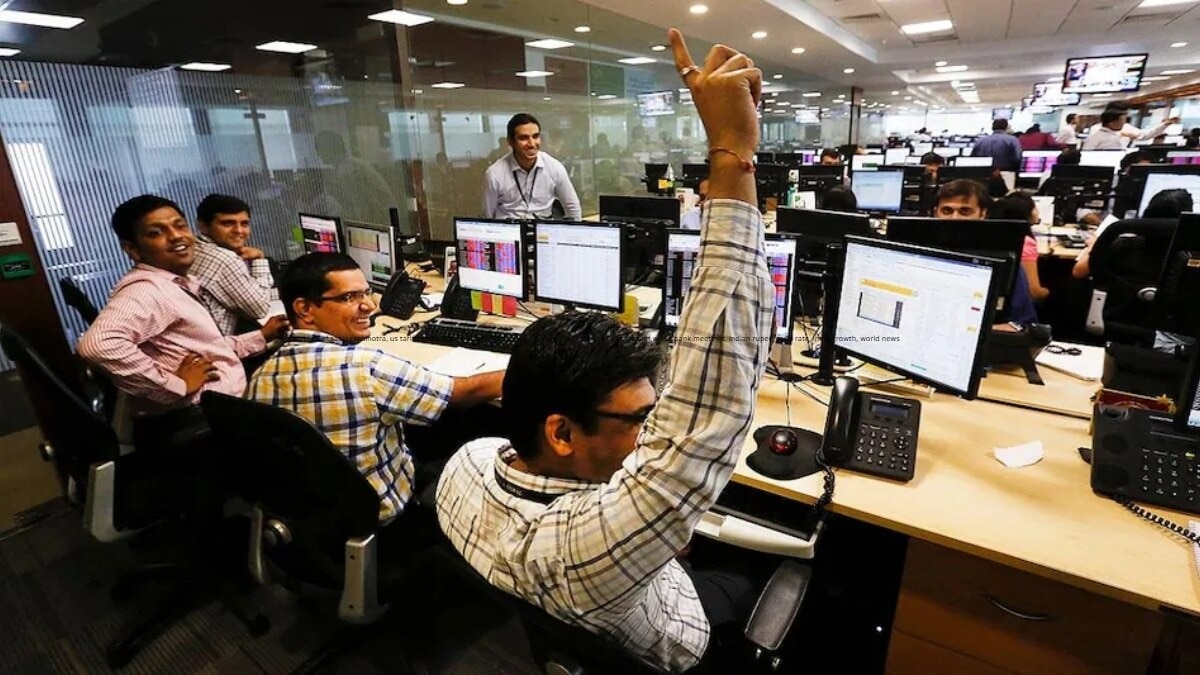
Sensex and Nifty were trading 1 per cent higher each in Monday's trade amid a Reuters report suggesting markets regulator SEBI has proposed removal of long term capital gains (LTCG) tax on investments by foreign investors in India.
At present, foreign portfolio investors (FPIs) pay 20 per cent short-term (STCG) and 12.5 per cent long-term (LTCG) on listed equity, with the surcharge and cess applying on top, making effective rate is somewhat above the headline. Securities transaction tax is charged separately on trades. Some investors, however, can claim treaty relief depending on their jurisdiction.
This made many market participants believe a removal of LTCG for FPIs may lift Sensex and Nifty after $64 billion in FPI outflows in the past two years.
"It helps, but it is a small lever beside valuation. Eliminating LTCG would add about 2.2 percentage points to an average year’s dollar return for a foreign investor, comparable to the rupee’s average drag. A 1 time re-rating of the P/E is worth 5.8 per cent and a return to the 10-year average P/E would be worth 24.3 per cent," JM Financial said in a note.
The domestic brokerage said a LTCG removal for FPIs would raise the response of flows to a rising market, not create the rise. In total, any such relief could add $3–5 billion to FY28E inflows in its bull case, it said.
The domestic brokerage said the move may matter most as a signal.
"A credible removal or a holding-period reform in the February 2027 Budget would tell allocators that policy is working for them. We would expect that to matter most at the margin of dedicated versus benchmark-relative money," it said.
The capital gains tax is computed on the rupee gain, not the dollar gain. When the rupee depreciates, a foreign investor can owe tax on a gain that is smaller, or even negative, in dollars.
To recall, the Finance Minister Nirmala Sitharaman in mid-October said she is open to feedback on LTCG and STT, and the Nifty rose 1.6 per cent that day.
"If and when this happens, it is likely to be viewed largely as a positive development. However, we will have to wait for the final announcement, which could form part of the Budget, as its presentation is about two months away," Raamdeo Agrawal, Chairman and Co-Founder of Motilal Oswal Financial Services (MOFSL), told Business Today.
JM Financial noted that proposals to abolish LTCG on equities or extend the qualifying holding period are under discussion. STT on equity derivatives was raised from April 1, 2026.
Data showed equity LTCG collections stood at Rs 1.29 lakh crore in FY25, about 2.9 per cent of the Centre’s budgeted gross tax receipts for FY27, against a 4.3 per cent of GDP fiscal deficit target.
"India is an outlier among major Asian markets. Korea exempts gains on listed shares unless the investor held 25 per cent or more in the five years before sale. Taiwan has no capital gains tax on listed securities (suspended in 2016) and charges a 0.3 per cent transaction tax on sales.
Singapore and Hong Kong have none. China’s gains on listed shares are provisionally exempt. Indonesia charges a flat 0.1 per cent on gross transaction value. Brazil generally exempts non-residents on regulated exchanges, subject to rules," JM Financial said.
JM Financial said foreign investors were net buyers of Korean and Taiwanese equities in the same months they sold India, according to one recent policy paper. Sector mix and earnings momentum also differ across the three markets, so the tax is one of several differences, it said.
Related Stories

Around 600% jump in 5 years: Citi maintains 'buy' on Maharatna defence PSU HAL for up to 28% - Check target, rationale
HAL shares have weakened recently, but Citi retained its Buy rating and ₹6,175 target, implying about 28% upside. Citi cited higher inventory and support from engines, helicopters and repairs amid delayed Tejas Mk1A deliveries.

AI relief fails to lift legacy IT stocks as earnings worries weigh
The Indian IT sector has seen a rollercoaster of activity, where mid-sized companies have outperformed their larger peers recently. Increased deal bookings are promising, yet slow revenue growth due to client indecision lingers. The emergence of AI technology brings both new possibilities and pricing pressures for classic services. To sustain their margins in this shifting landscape, companies are honing their operational efficiency.

YES Bank files SC review plea over AT-1 bonds: What does it mean for investors after stock's 15% rebound?
YES Bank has asked the Supreme Court to review its October 15 ruling against the write-down of ₹8,415 crore in AT-1 bonds. The move follows a bondholders’ trustee’s contempt petition seeking restoration of the bonds. The ruling has weighed on the bank’s capital outlook and share price.