
Chip selloff deepens Wall Street losses as doubts grew over AI returns
A significant selloff in semiconductor stocks affected major US indexes amid rising concerns regarding AI investment returns. The Nasdaq 100 dropped by 1.8%, continuing its longest losing streak since 2008. Market participants are questioning if AI infrastructure investments will yield profitable returns despite strong demand for chips. Federal Reserve Chairman Kevin Warsh maintained a neutral stance on interest rates during discussions at the IMF meetings.
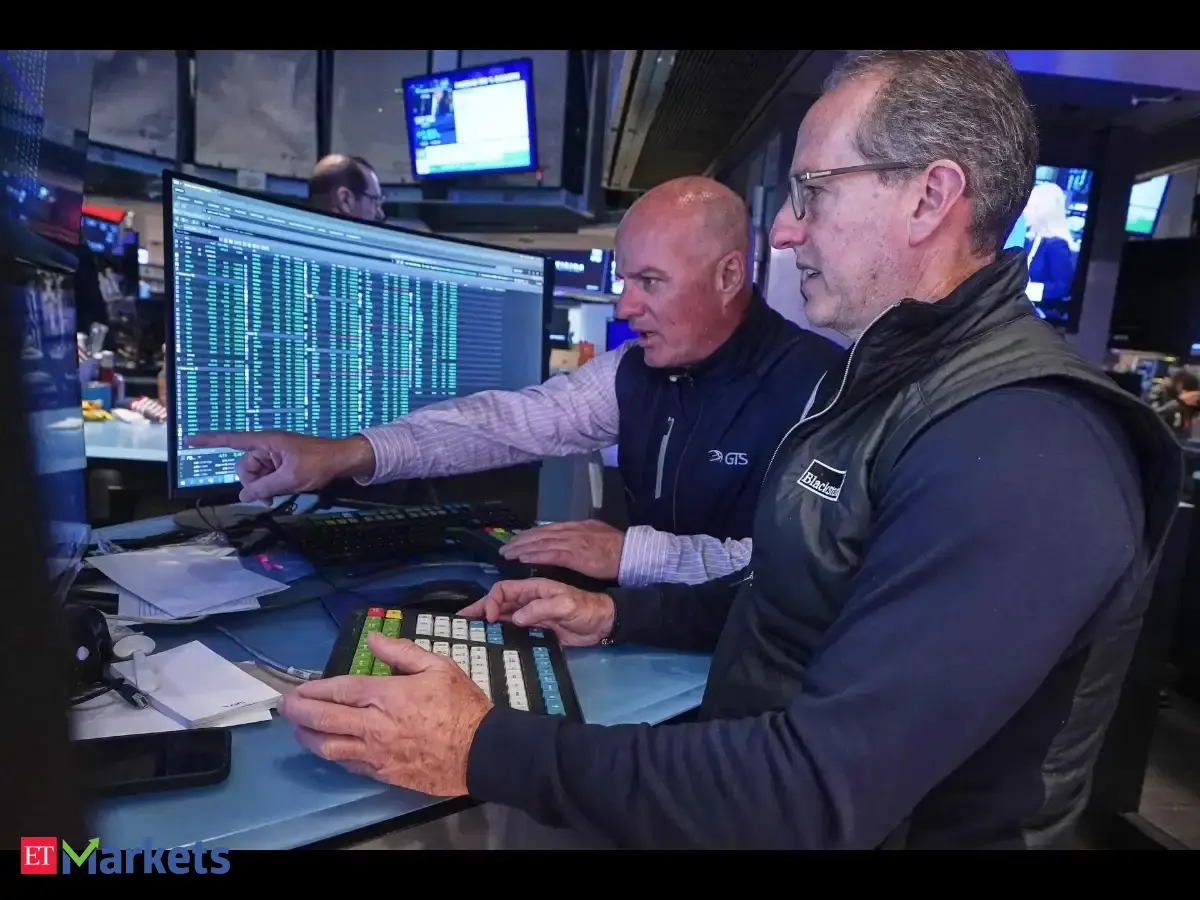
Selloff in semiconductor stocks extended on Friday weighing on major US indexes as concerns mounted over the outlook for the artificial-intelligence trade, Bloomberg reported.
Weakness in technology shares weighed on the S&P 500 even as most of its components advanced. The Nasdaq 100 dropped 1.8%, while an index of major chipmakers declined for an eighth consecutive session—its longest losing streak since 2008.
CoreWeave sank 9.5%, extending a rout driven by concerns that investment in AI infrastructure had outpaced companies’ ability to generate sufficient returns.
Fawad Razaqzada of Stonex Trading and Forex.com told Bloomberg that the market debate had shifted from the potential size of the AI opportunity to whether the enormous investment required to realise it would ultimately prove profitable.
Although demand for chips and computing capacity remained strong, investors sought clearer evidence that spending on data centres, power generation, networking and other infrastructure would produce adequate returns. Signs that these concerns had begun spreading into credit markets added to the pressure, the report said.
Also Read | CoreWeave stock wipeout exposes divide between AI fear and greed
Higher interest rates further complicated the outlook by reducing the present value of future earnings and increasing the cost of financing the infrastructure needed for the next phase of AI expansion.
The uncertainty renewed demand for safe-haven US Treasuries , helping bonds pare earlier losses. Meanwhile, Federal Reserve Chairman Kevin Warsh did little to challenge expectations that the central bank would keep interest rates unchanged that month.
During a discussion at the International Monetary Fund’s annual meetings in Bangkok, Warsh avoided commenting on the monetary-policy outlook or the US economy beyond reaffirming the Fed ’s commitment to price stability. He also said he would not prejudge the central bank’s remaining policy meetings of the year.
Brian Jacobsen of Annex Wealth Management told Bloomberg News that the week’s most notable development was the market’s reaction rather than the inflation data or comments from the Fed. As several AI-related stocks declined, investors shifted money into healthcare, financial, materials and smaller-company shares, which performed comparatively well.
Related Stories
Tata Investment Corp: Noel Tata to retire and become chairman emeritus, Bahram Vakil named successor
Tata Investment Corporation has appointed AZB & Partners co-founder Bahram Vakil as chairman, succeeding Noel Tata, who retires from the board after 22 years and becomes chairman emeritus.

Nifty 50 target: Index in sweet spot? 28,000 soon? HSBC, Citi and Bernstein raise targets after sharp 13.5% recovery
Citi raised its Nifty 50 target to 28,000, while HSBC upgraded Indian equities to overweight and Bernstein lifted its target to 26,100.
Triveni Turbine Q2 Results: Net profit falls 42% on weak export sales; EBITDA drops 44%
Triveni Turbine reported a 41.6% YoY decline in Q2 FY27 net profit to ₹53.3 crore, while revenue fell 3% to ₹491 crore. EBITDA declined 43.9% to ₹64 crore, with margins contracting to 13%. Separately, the company enhanced its corporate guarantee for its South African subsidiary by up to $6 million, raising the aggregate facility limit to $15 million.